
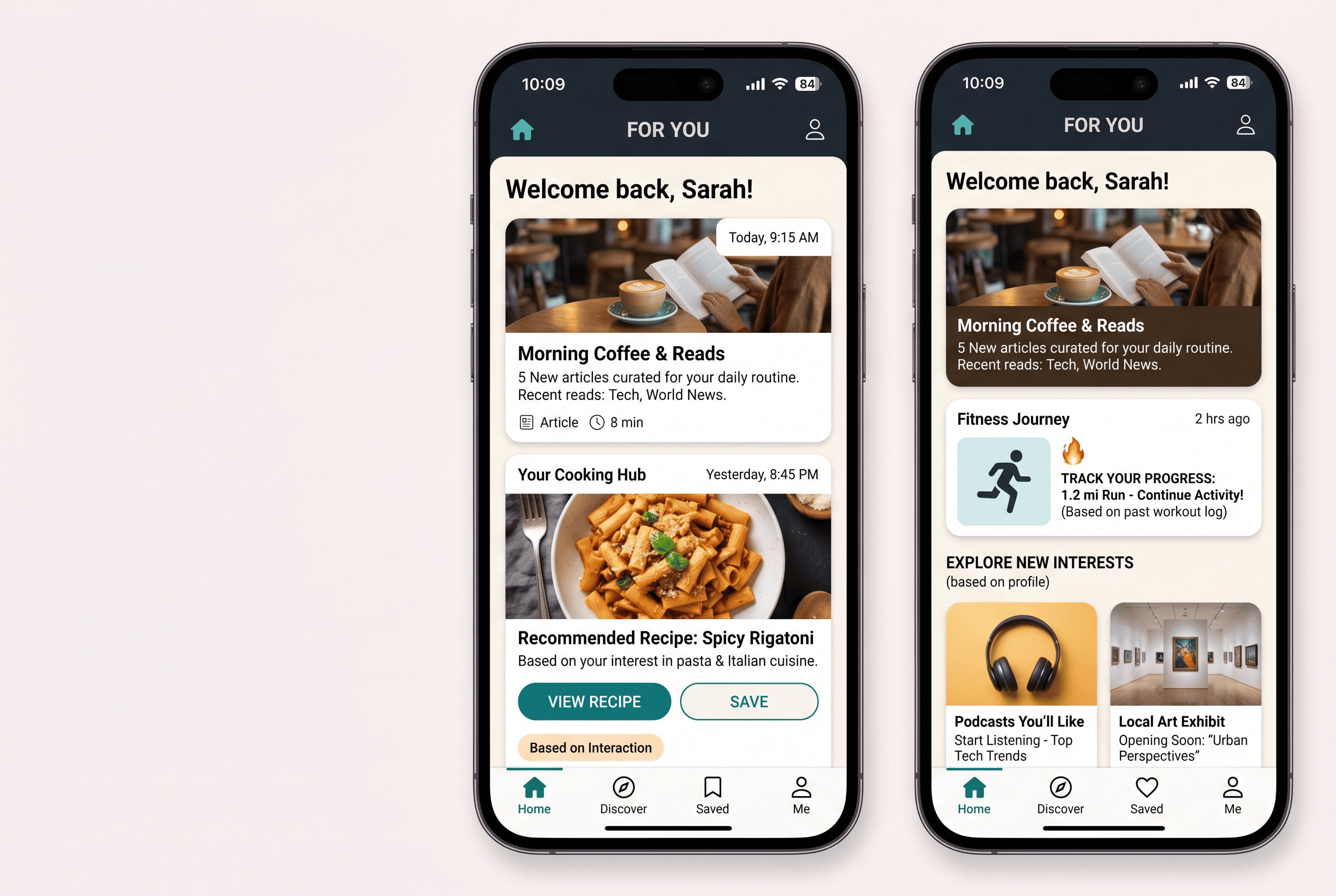
You've spent months building a polished app. Users download it, open it twice, and vanish. The culprit usually isn't the UI — it's what the app shows people and when it shows it. Smart content delivery is the discipline of surfacing the right information to the right user at exactly the right moment. When done well, it transforms a forgettable tool into a product people genuinely depend on.
What 'Smart' Actually Means
Most apps treat every user identically — same home screen, same push notification copy, same content order. Smart delivery is the opposite: the experience adapts based on who the user is, what they've done before, and the context they're in right now. This isn't science fiction. It's a combination of behavioural signals, simple ML models, and well-structured content schemas that most product teams already have the data to implement.
The Three Pillars of Smart Delivery
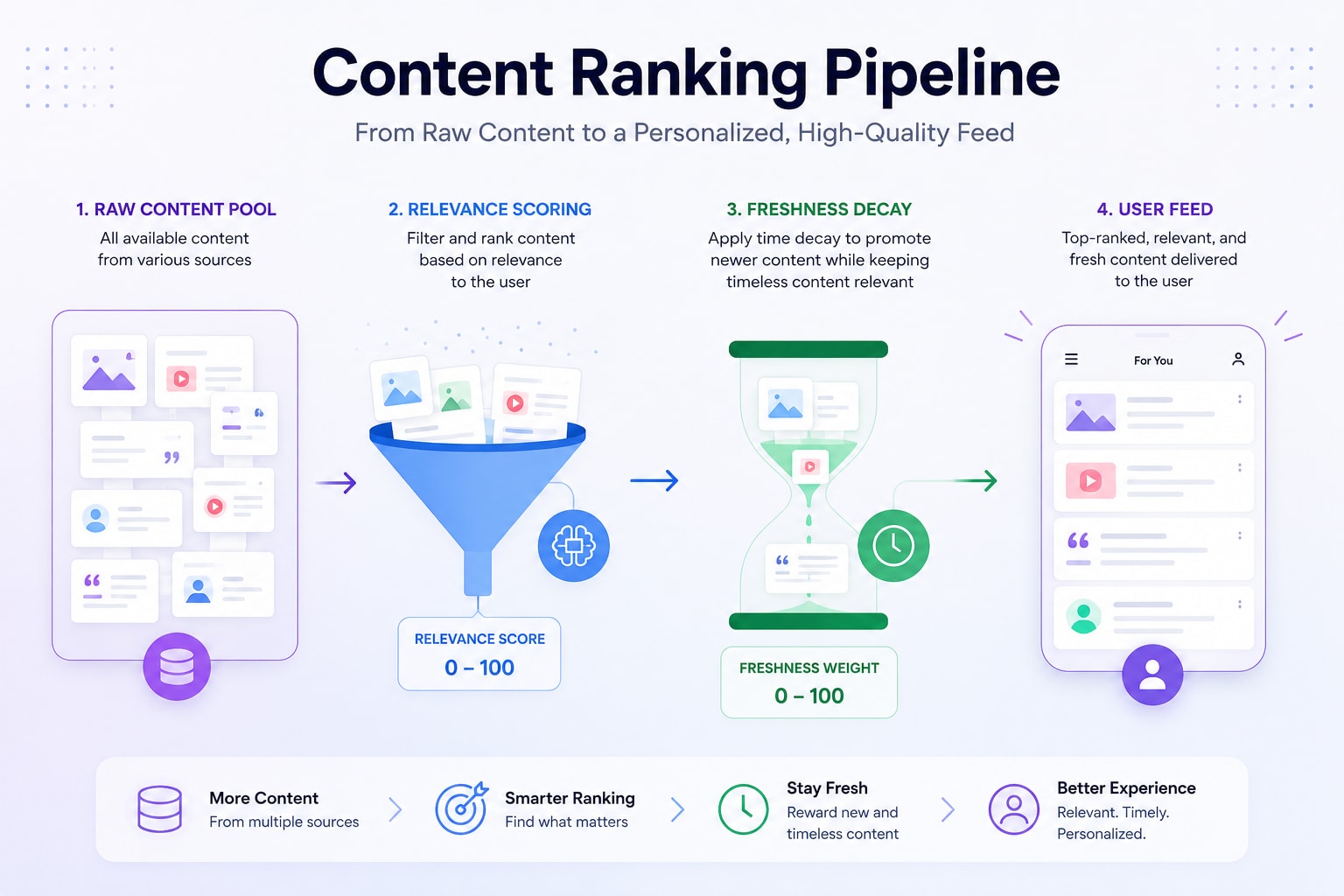
- Relevance — Content is ranked or filtered by what the user has engaged with before, not just what was published most recently.
- Timeliness — Delivery happens when the user is most likely to be receptive, informed by usage time patterns and lifecycle stage.
- Context — The app understands where the user is in their journey (new, power user, at-risk) and adjusts content tone, depth, and format accordingly.
Why Retention Breaks Without It
The average mobile app loses over 70% of its users within the first week. Much of that churn is caused not by bugs or slow performance, but by irrelevance — users open the app, don't immediately see value, and leave. When content feels generic, users quickly form the mental model that this app isn't for them. Re-engaging them after that point is exponentially harder than keeping them engaged in the first place.
Retention is won or lost in the first three sessions. If the product hasn't demonstrated personal value by then, no re-engagement campaign will save it.
Common wisdom in product analytics circles
Practical Patterns That Work
1. Behavioural Segmentation Over Demographics
Demographic segments (age, location, plan tier) are a starting point, but behavioural segments are where the real gains live. Group users by what they do — features used, content categories clicked, sessions per week — and tailor the content feed to each cluster. Even three or four behavioural segments can produce measurable retention lifts without complex infrastructure.
2. Progressive Disclosure for New Users
New users are overwhelmed by full-featured interfaces. A smart delivery system detects first-session users and strips the experience down to the single action that delivers the core value proposition fastest. Each subsequent session unlocks slightly more depth — a technique called progressive disclosure. The result is that users build confidence incrementally rather than bouncing off a wall of options.
3. Time-Aware Push and In-App Messaging
- Record the local hour of each user's last three active sessions.
- Cluster users into delivery windows (morning, midday, evening) rather than blasting everyone at once.
- A/B test message copy per segment — power users want feature updates; casual users want motivational nudges.
- Suppress notifications entirely for users who opened the app in the last 24 hours to avoid nagging loyal users.
4. Content Freshness Signals
Returning users should never see the same home screen twice. Implement a freshness score for each content item — decaying its rank the more times a user has been exposed to it. Pair this with a seen_by flag in your content schema and a simple MAX(freshness_score) WHERE NOT seen_by user_id query pattern. This alone can cut 'nothing new to do here' drop-offs significantly.
What to Measure
Engagement metrics like DAU and session length are lagging indicators. The leading metrics that actually predict retention improvements from smart content delivery are:
- Content click-through rate (CTR) by segment — rising CTR in a segment means your targeting is improving.
- Time-to-first-value (TTFV) — how quickly a new user reaches the moment the app 'clicks' for them.
- Day-7 and Day-30 retention cohorts — compare cohorts before and after delivery changes to isolate impact.
- Churn prediction score movement — if you have an at-risk model, track whether content interventions move users out of the risk bucket.
How We Apply This at Fall Rise
Across the products we build and maintain — from Penso Notes to the Bhaada logistics platform — smart content delivery is baked into the architecture from day one. For Penso, that means surfacing writing prompts timed to each user's journaling rhythm. For Bhaada, it means showing drivers the most relevant booking opportunities based on their route history. The implementation details differ; the underlying principle is identical: serve what matters, when it matters.
Smart content delivery isn't a feature you bolt on after launch — it's an architectural decision that shapes your data model, your analytics setup, and your content schema from the start. If you're building a product and want to get this right early, let's talk. Getting the foundation right is far cheaper than re-engineering it after churn has already set in.